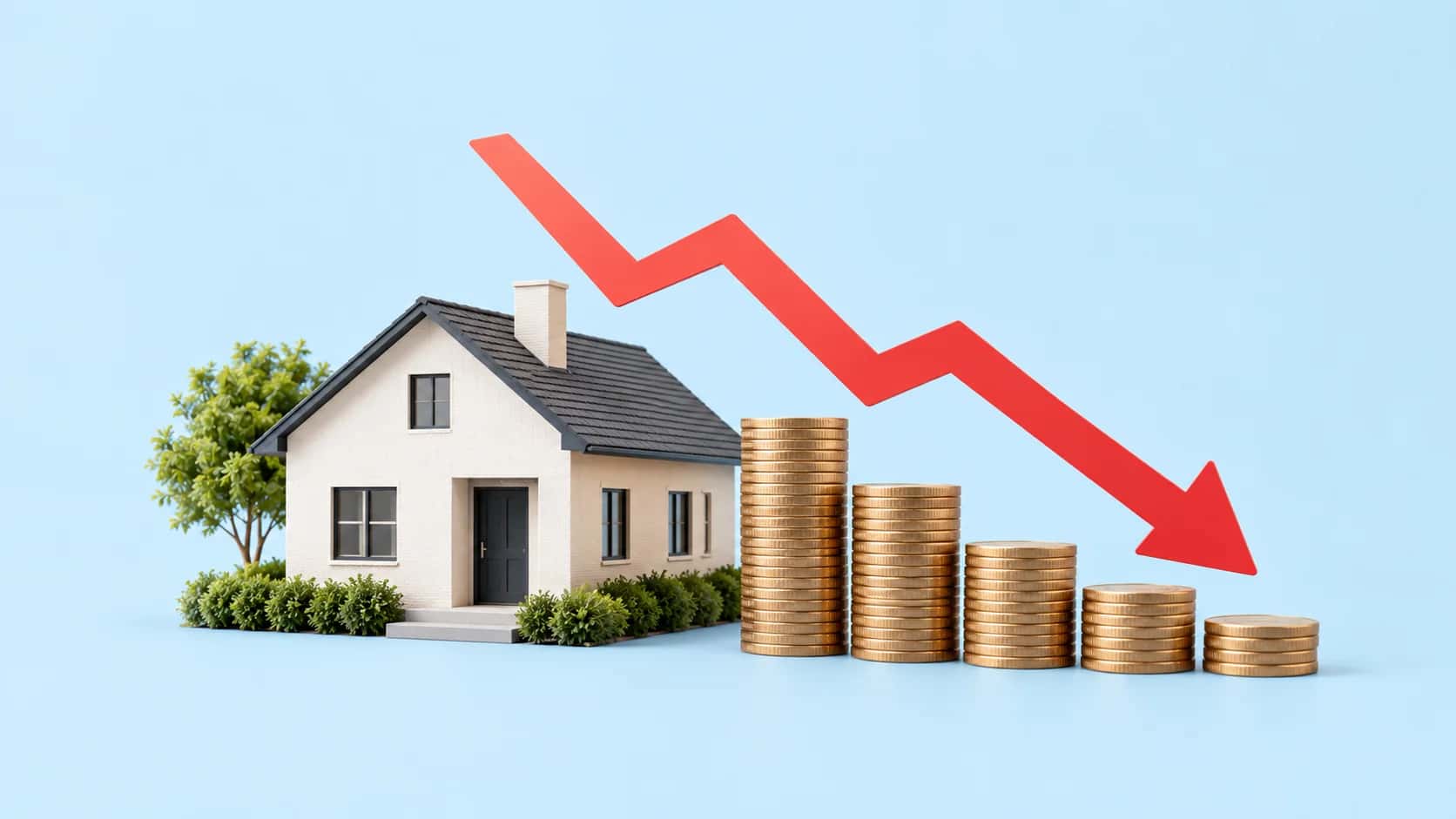
Mortgage Default Worries Drop to 39% in CMHC Survey as Renewers Absorb $375 Payment Hike
Why the Improvement Is Real — and Why January 2026 Sentiment Is Not an All-Clear
By
Published: May 21, 2026
Credit: Shutterstock
Key Takeaways
•Default worry among Canadian mortgage consumers fell 14 points year over year, but the survey reflects January 2026 — before potential H2 rate moves and the Bank of Canada's next decision.
•Renewers absorbed an average $375 monthly payment increase, with 35% reporting real financial pressure from rate changes.
•Confidence in rising home values dropped from 74% to 68%, narrowing the equity cushion HELOC-dependent owners count on.
Canada Mortgage and Housing Corporation released the 2026 Mortgage Consumer Survey on May 20. The headline is the kind of number that lands easily: 39% of mortgage consumers worried about defaulting on their payments, down from 53% in 2025. A 14-point drop in default anxiety is real progress, and it would be unfair to wave it away.
But the survey is a January snapshot. CMHC's field team interviewed 4,112 recent mortgage consumers between January 7 and February 1 — a period when the Bank of Canada had just held its policy rate at 2.25% and inflation was tracking near target. That is the world the survey describes. It is not necessarily the world Canadian homeowners will be renewing into through the back half of the year.
The right reading is interpretive. The drop in default worry is the headline. The $375 average monthly payment increase that renewers actually absorbed is the benchmark. The 6-point drop in home-value optimism is the quiet structural story underneath both.
Stay on top of Canadian homeowner news
Advertisement — Article Continues Below
What CMHC Measured — and When
Survey Methodology and Sample
The 2026 edition surveyed 4,112 Canadian mortgage consumers — all of them primary household decision-makers who had completed a mortgage transaction in the previous 18 months. Renewals accounted for 66% of those transactions. Refinances took 19%, first-time purchases 11%, and repeat purchases 5%. According to CMHC's 2026 Mortgage Consumer Survey, the survey ran from January 7 to February 1, 2026.
That mix matters. When the survey talks about who is feeling financial pressure, who is cutting back, and who is worried about defaulting, it is mostly talking about renewers. The story this dataset tells is a renewal story first, and a new-buyer story second. Renewals dominated 2025 transaction volumes as the first big 2020–21 cohort hit maturity, and although that wave has now eased past its peak, renewals still command the largest share of mortgage activity in 2026.
Advertisement — Article Continues Below
The Headline: Default Worry Drops Fourteen Points
Sentiment Is Not Cash Flow
The 39% default-worry figure is the cleanest year-over-year improvement in the survey. It marks a meaningful return toward pre-renewal-wave normal. But sentiment is downstream of cash flow, and cash flow tells a more textured story.
Among the renewers who form two-thirds of the sample, 35% reported increased financial pressure from interest-rate changes. Their average monthly payment rose by about $375. Roughly three-quarters of those renewers saw their payments increase by more than $100 a month. The improvement in default worry is real. So is the dollar figure renewers are now living with.
This is the gap. People feel better, but their budgets did not get easier. The improvement in sentiment is a function of acclimation as much as it is a function of fundamentals. Households that absorbed a $375 hike a year ago and survived it are, naturally, less anxious about the next one. That is human, and it is honest. It is not the same as the underlying risk easing — a distinction TD Economics flagged in its own renewal modelling, where the average renewal payment increase softened from roughly 10% in 2025 to closer to 6% in 2026 even as the dollar figures stayed material.
Advertisement — Article Continues Below
Inside the $375 Payment Hike
How Households Are Defending Their Payments
Three in four mortgage consumers told CMHC they are already taking at least one action to reduce the risk of missing payments. The most common steps were budgeting or monitoring spending (34%), decreasing expenses (31%), increasing income (17%), seeking professional financial advice (17%), and consolidating debt (10%).
The "decreasing expenses" group is worth a closer look. When CMHC asked the 31% who were trimming spending where they were cutting, the categories were predictable but specific: dining out and takeout, entertainment and leisure, vacations or travel, shopping, and personal care. These are the line items households squeeze first when the mortgage is non-negotiable. A parallel TD Bank survey of homeowners found two in three Canadians anxious about renewal and 56% planning to cut spending — close enough to the CMHC reading to suggest the discretionary-spending pullback is becoming a defining feature of the renewal wave, not a fringe response.
A quieter improvement sits underneath the cuts. The share of consumers using one credit facility to pay another fell from 22% to 19%, and 39% of mortgage consumers — 41% of renewers — are making extra or lump-sum payments to reduce debt. That last figure is a meaningful resilience signal. It is also the kind of signal that can flip quickly if rate expectations shift.
Year-Over-Year Snapshot: 2025 vs. 2026
The table below benchmarks the survey indicators a homeowner approaching renewal can compare against their own situation. The 2026 column is where sentiment now sits; the 2025 column is where it was a year ago.
Indicator
2025
2026
Mortgage consumers worried about defaulting
53%
39%
Renewers reporting financial pressure from rate changes
—
35%
Average renewer monthly payment increase
—
~$375
Consumers expecting home value to rise (next 12 months)
74%
68%
Consumers using one credit facility to pay another
22%
19%
Homebuyers who paid the maximum they could afford
58%
52%
Average years to save a down payment
3.4
4.4
Median financial gift toward down payment
—
$30,000
The improvement is broad. So is the strain underneath it. The two readings are not in conflict — they are the same survey, viewed from different sides.
Advertisement — Article Continues Below
Home Values: Cooling Expectations and the HELOC Implication
Why Sixty-Eight Percent Matters More Than It Looks
The share of mortgage consumers expecting their home's value to rise over the next 12 months fell from 74% to 68%. That number gets less attention than the default-worry headline, but it has a longer tail.
Eighty-one percent of consumers still see homeownership as a good long-term financial investment. The softening is not in conviction about homeownership; it is in the near-term price-growth assumption that quietly underwrites a lot of household planning — particularly for owners who borrow against their equity.
The Financial Consumer Agency of Canada reports that roughly 35% of Canadian homeowners hold a home equity line of credit. Nearly half use HELOCs for renovations, and about one in five use them for day-to-day expenses. For these households, slower home-price growth is not an abstract economic indicator — it is a direct constraint on future borrowing capacity. If you were counting on equity appreciation to fund a renovation, a tuition payment, or a buffer for an unexpected cost, a six-point drop in price-growth confidence is the first tap on the brake.
What's Coming: Why January Sentiment Should Be Stress-Tested
The Rate Path
The Bank of Canada held its policy rate at 2.25% on January 28, 2026, with inflation tracking near the 2% target. That is the rate backdrop the survey captures. It is also the rate backdrop the market is now actively re-pricing.
Scotiabank Economics in late April flagged a path that takes the policy rate from 2.25% to roughly 3.0% by year-end — about 75 basis points of tightening concentrated in the back half of the year. That is a forecast, not a certainty. But it is the kind of forecast that, if it plays out, would change the renewal math for households whose terms come up in Q3 and Q4.
This is the heart of the timing caveat. The 39% default-worry figure is a January reading. The renewal that lands in November will not necessarily land into the same rate environment.
The Renewal Pipeline and the Macro Backdrop
The Bank of Canada's own loan-level analysis estimates that about 40% of outstanding Canadian mortgages will renew over 2025 and 2026 at rates higher than their previous term — most of them five-year fixed mortgages originated when rates were materially lower. A separate Bank of Canada staff analysis notes that on average these renewals are not expected to produce severe new stress because borrowers were qualified at higher stress-test rates, but it explicitly flags that many households will still see meaningful payment increases.
CMHC's own Fall 2025 Residential Mortgage Industry Report observes that renewal volumes peaked in 2025 as 2020–21 cohorts hit their first renewals. 2026 is past the peak, but renewals still dominate market activity. The wave is receding; it is not gone.
The macro pressure is the part that gets underplayed. Statistics Canada reported a national household debt-service ratio of 14.64% in the third quarter of 2025, with mortgages making up roughly three-quarters of household credit-market debt and the debt-to-income ratio near 177%. The $375 average payment hike lands on top of an already-elevated debt-service burden. That is not a forecast of distress. It is a description of how little room many households have before a payment change becomes a budget restructuring.

Important
A 14-point drop in default worry is good news. It is not the same as a 14-point drop in default risk. The right way to use the 2026 survey is as a stress-test data point: compare your own renewal situation to the $375 monthly average, the 35% pressure rate, and the 68% home-value expectation — and decide whether your budget would still work if rates moved.
Reading the 2026 Survey on Your Own Terms
CMHC's data is a portrait of where the average mortgage consumer was sitting in January. The closer your renewal date is to the front of 2026, the more directly that portrait applies. The closer your renewal date is to the back half — or beyond — the more space there is between the survey's reading and the rate environment you may actually renew into.
The practical question is not whether the survey is good news or bad news. It is both. The practical question is whether your own renewal would still work at the rate Scotiabank is now pricing in, with the $375 buffer this survey implies the average renewer needed. If the answer is yes, the survey is reassuring. If the answer is not yet, the months between now and your renewal date are the buffer to build.
Stay on top of Canadian homeowner news
About the Author
Ryan May
Senior Contributor / Founder
Ryan is the founder of Homeowner.ca and a proud Canadian homeowner based in Guelph, Ontario. Over his 25-year career in digital publishing, he has focused on transforming complex information into clear, practical guidance that helps people make confident, well-informed decisions.