What The 2025 Loss Numbers Signal About Pricing, Coverage, And Renewals Across Canada

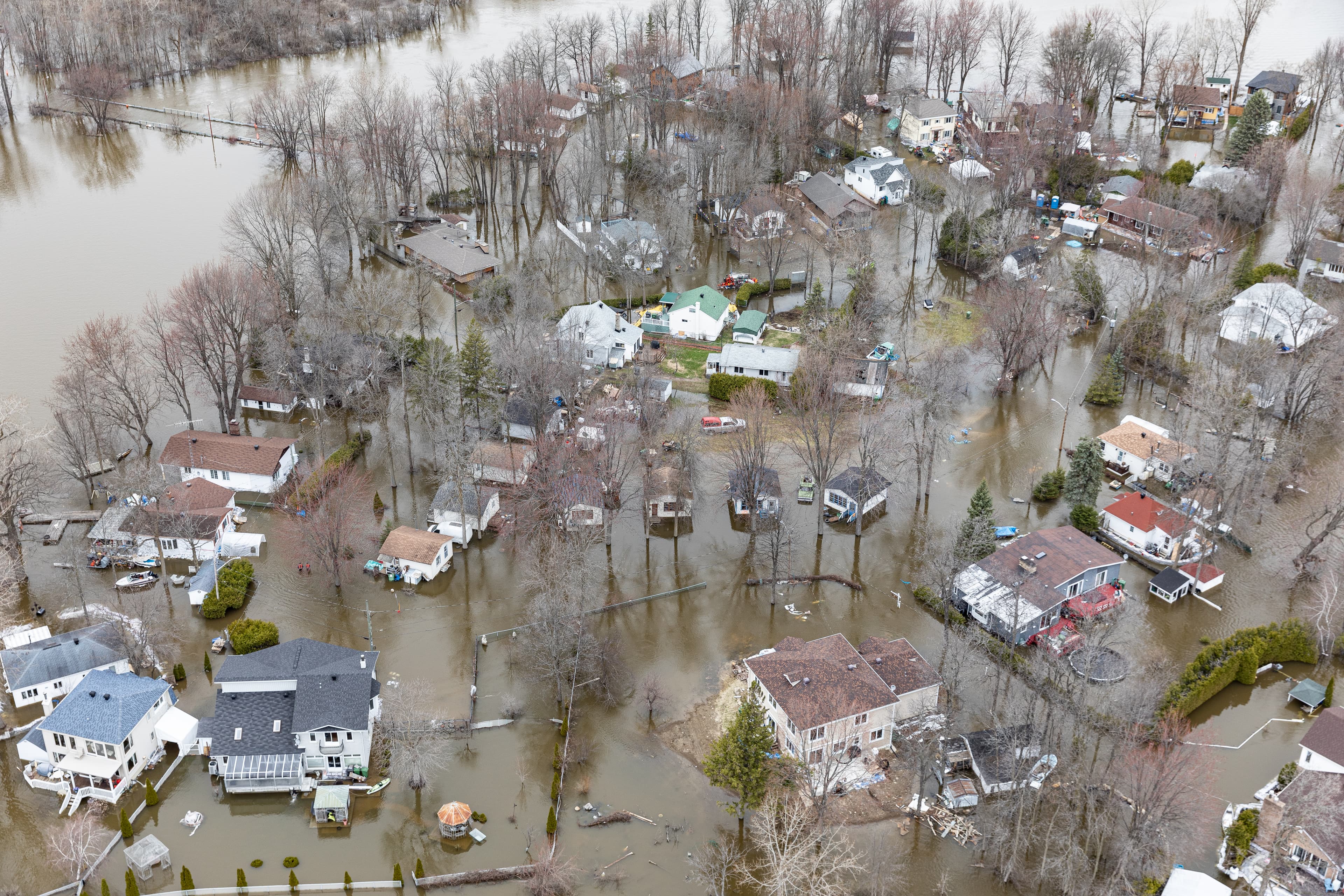
A flooded neighborhood highlights the vulnerabilities of residential areas to natural disasters, impacting home insurance premiums. (Credit: Shutterstock)
Insured losses from severe weather in Canada topped $2.4 billion in 2025, and the bigger story is what that number sits inside: in a January 2026 update, the Insurance Bureau of Canada reported that catastrophic insured losses reached $37 billion over 2016–2025—nearly triple the inflation-adjusted $14 billion recorded over 2006–2015.
That decade comparison is a useful “macro signal” for homeowners because it helps explain why the home insurance market feels different at renewal than it did a few years ago. When insured catastrophe losses move from occasional spikes to a sustained pattern, insurers don’t just adjust pricing—they adjust how risk is accepted, how policies are structured, and which perils are tightly managed.
This explainer breaks down what the new loss data does (and doesn’t) mean, how it connects to premiums and coverage across provinces, and what to review on your own policy so you can interpret renewal changes clearly—without panic and without guesswork.
A $2.4 billion year can sound abstract until you translate it into what insurers see: an accumulation of claims from different perils, across different regions, landing on the same balance sheet. The 2025 loss total was driven by a mix of events—from an ice storm in Ontario and Quebec to wildfires in Manitoba and Saskatchewan, a major Calgary hailstorm, Prairie storms, and floods in British Columbia—highlighting that the pressure isn’t isolated to one hazard or one corner of the country.
It’s also worth separating three concepts that get blurred in everyday conversation:
For home insurance, that last category is the one that most directly affects renewals. Insured-loss trends feed into underwriting, pricing models, catastrophe risk appetite, and (crucially) the cost of reinsurance—the insurance that insurers buy to protect themselves from large catastrophe years.
The decade numbers also matter because they reduce the temptation to treat any single year as an outlier. In fact, the bureau’s 2024 record-loss announcement described a breakout year where insured severe-weather damage surpassed $8.5 billion, putting 2025’s $2.4 billion into a “high-but-not-record” context rather than a return to older norms.
If the last decade was about rising catastrophe losses, the current phase is about how insurers keep offering coverage without taking unlimited exposure in the highest-risk areas. In its State of the Home Insurance Market: 2025 report the Insurance Bureau of Canada describes a mix of tools insurers use to manage severe-weather risk, including higher standard deductibles, peril-specific deductibles (such as hail deductibles in Alberta’s hail-prone corridor), depreciation-focused roof settlements in some cases, and shifting certain coverages from “included by default” to optional endorsements.
For homeowners, the change to watch is that coverage can tighten in ways that are easy to miss if you only look at the premium line item. Examples of renewal-era changes that can materially affect your financial risk include:
Deductible inflation
A higher deductible reduces the insurer’s exposure per claim, but it also increases the amount you must pay before coverage applies. The painful version of this is a deductible that rises faster than your emergency savings.
Peril-specific deductibles and limitations
Instead of one deductible for everything, some risks can carry their own deductible (hail, water, wildfire). That shifts cost onto homeowners specifically where claims are most frequent or severe.
Water-related coverage as an “add-on,” not an assumption
Sewer backup, overland flood, and related water endorsements can be limited, priced separately, or unavailable depending on risk.
Roof settlement changes
When wind and hail losses grow, roofs become a focal point. If your policy switches from full replacement to a depreciation method past a certain roof age (or adds conditions), the same storm can produce a very different payout than it would have under older wording.
Resilience incentives—real, but uneven
Some insurers offer premium reductions or endorsements tied to risk reduction (sump pump upgrades, backwater valves, wildfire mitigation). The existence of these programs doesn’t guarantee meaningful savings for every home, but it does signal that insurers are increasingly pricing based on “loss prevention” signals where they can verify them.
One more layer sits behind all of this: reinsurance. When insurers pay more to reinsure catastrophe risk (or can buy less capacity), they have strong pressure to reprice, restrict, and redesign coverage locally—even if your individual home hasn’t had a claim.
Flood risk is where the difference between affordable and available becomes most obvious. A Natural Resources Canada synthesis citing industry estimates notes that the top 10% of households—about 1.5 million homes—classified as high risk for flooding may not have access to affordable flood insurance.
Homeowners can interpret that reality in a practical way:
This also changes what “being insured” means in day-to-day planning. If flood coverage is limited or unavailable in your area, you may need to treat water risk the way you’d treat an unfunded liability: something you plan around, document, and discuss explicitly with your insurer or broker rather than assuming the policy will respond.
The important point isn’t that every homeowner is about to lose coverage. It’s that the market is differentiating more aggressively, and flood risk is one of the clearest dividing lines.
This isn’t a call to shop quotes or rush into upgrades. It’s a framework for understanding your current policy—so you can spot meaningful changes early, ask better questions, and avoid surprises after a loss.
Here’s what’s become more consequential in today’s home insurance market:
Your deductibles (plural, not just one)
Confirm whether you have separate deductibles for water, hail, wind, wildfire, or “all other perils.” Then ask yourself a simple question: could I comfortably pay each one tomorrow?
Water damage coverage details
Check whether sewer backup and overland flood are included, optional, capped by a separate limit, or excluded. Also note any special conditions (for example, requirements around sump pumps or maintenance).
Roof and exterior settlement wording
Look for any language about depreciation, actual cash value, age-based limitations, or endorsement requirements for certain roof types.
Coverage limits that are easy to under-estimate
Exclusions and “quiet” restrictions
Exclusions are where real financial risk hides. If you see terms you don’t recognize, ask for plain-language clarification and example scenarios.
Your claims history and property file accuracy
Errors happen. Confirm the basics (year built, roof age, square footage, heating type, plumbing updates). A wrong detail can push you into a different price tier.
Documentation that supports risk reduction
If you’ve done work that plausibly reduces risk (roof replacement, sump pump, backwater valve, drainage changes), keep receipts and dates. Even when it doesn’t reduce price, it can reduce underwriting friction.
If your renewal comes with new wording or endorsements, ask for the “specimen” policy wording (or the exact endorsement text) and a summary of what changed from last year. Small wording shifts can matter as much as a price change.
The $2.4 billion insured-loss figure for 2025 is news, but the decade total is the signal: catastrophic losses have moved into a range where insurers can’t treat them as rare. That shift flows through to homeowners as higher premiums, sharper regional differences, and more policies that manage risk through deductibles, endorsements, and conditional coverage.
If there’s a calm takeaway, it’s this: you don’t need to become an insurance expert overnight. You do, however, benefit from treating your policy like an operating document—one you review for limits, deductibles, and excluded risks—because the market is increasingly pricing the details, not just the address.