The third project is the one Canadian winters punish the hardest. A walkway that is comfortable in summer can heave, glaze, or crumble through November to April, and the resulting unevenness is precisely the environmental factor that turns a routine walk to the car into a fall. Designing a walkway for aging in place is mostly about three things: slope, surface, and edges.
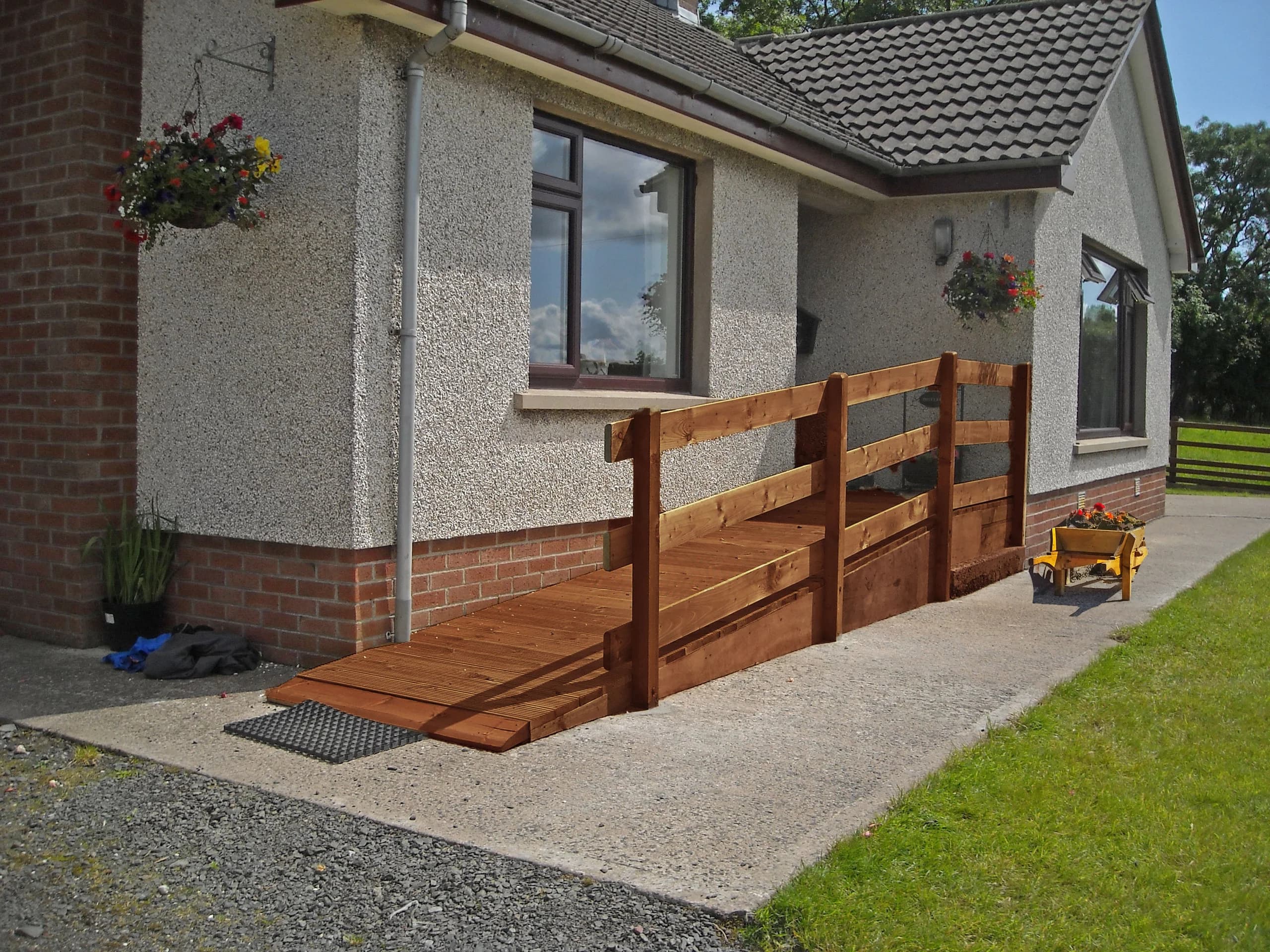
Slope sounds technical but resolves quickly. A walkway should run at no more than a 1:20 (5%) grade in the direction of travel, and it should pitch no more than 1:48 (about 2%) across its width to shed water — this is the dividing line between a "walk" and a "ramp," and it is recognized in the National Building Code of Canada's barrier-free provisions. Above 5%, code treats the surface as a ramp, which means handrails, intermediate landings, and additional design requirements. Most home walkways do not need to be ramps. They need to be long enough and graded gently enough that they never have to be.
Surface is where Canadian climate forces real choices. Broom-finished concrete is the most common and remains a sound choice — it is firm, stable, and offers reasonable slip resistance when the finish is fresh and well-maintained. Interlocking pavers do well too, especially modern textured options designed for slip resistance, and they have the additional advantage that individual units can be lifted and reset if frost causes them to shift. Natural stone is beautiful but variable; smooth flagstones can become slick when wet, and irregular stones can introduce trip hazards as they settle. The general guidance from accessibility surface standards is that the surface should be stable, firm, and slip-resistant, as detailed in U.S. Access Board surface guidelines, which Canadian designers commonly reference. Loose materials like uncompacted gravel do not meet that bar for a primary walking route, however charming they look in a garden setting.
Edges and transitions are where the small failures happen. The lip where a paver path meets a concrete driveway, the seam between the patio and the back step, the spot where the walkway abuts the garden bed and the soil settles two inches lower over a few seasons — these are the places where toes catch. A good walkway design holds its edges with curbing or strong flush transitions, drains water away rather than into joints, and reviews itself every spring for shifts that need re-leveling.
A Quick Reference For Your Walkway Conversation
When you are sitting at the kitchen table with a contractor's quote in front of you, this short table is the one to keep handy. It is the tactile version of the spec language you should hear (or ask for) on any outdoor accessibility project.
Step Nosings, Handrails, And The Cheap Wins
If the walkway itself is in decent shape, the highest-leverage upgrades are often the small ones. Painting a contrasting band on the front edge of an outdoor step — a strip of bright white or light grey on the leading edge — does more to prevent missed steps than almost any other intervention, and it costs the price of a tin of porch paint. Adding a continuous handrail to a short run of steps that previously had none is a meaningful upgrade for a few hundred dollars. Replacing a worn or slick step nosing with a textured composite version is similarly inexpensive. These are the projects to do first if a full walkway replacement is years away.
For broader winter strategy, our guide to hidden winter hazards after the first snowfall covers the icing, drainage, and snow-removal habits that protect everything you have just built.